The European Court of Human Rights has delivered a good solid judgment today in the case YY v Turkey, concerning the inability of a trans man to access gender reassignment surgery, a precondition to legal gender recognition, on account of being still fertile.
The Court found a violation of Art 8, which turns on a peculiar feature of the Turkish law that requires persons seeking an authorisation to undergo genital surgery for the purposes of obtaining gender recognition, to prove that they are infertile, even before undergoing surgery. In most other relevant countries, sterilisation (whether alone, or as a part of a broader gender reassignment package) is a prerequisite to legal gender recognition, as opposed to being a precondition to gender reassignment leading to gender recognition as in Turkey. The Turkish government was not able to justify this requirement, which was thus held to be "unnecessary in a democratic society."
Interestingly, the Court undertook an extensive survey of national laws in the area, noted the trends towards abandoning sterilisation altogether, including by citing relevant Council of Europe legislation, although it stopped short from ruling out the sterilisation requirement in abstract, distinct from the particular set of facts before it.
Four concurring judges (so a majority of the Chamber!) would have preferred a more in-depth examination of the validity of the sterilisation requirement in abstract. This bodes well for future challenges provided that the right set of facts comes before the Court.
Tuesday, 10 March 2015

Wednesday, 28 January 2015
Public hearing before the Grand Chamber in Gherghina v. Romania
In the good tradition of this blog, news come very late.
Take this for example, the Grand Chamber hearing in the case Gherghina v. Romania, which took place on 12 November 2014, which I have not yet reported on here, and which is my third Grand Chamber hearing in slightly longer than one year.
The case concerns the Romanian authorities' failure to ensure universities were accessible and that reasonable accommodation was offered to the applicant, a young man using a wheelchair. The hearing focused mostly on the existence and nature of remedies in Romania for the type of claims raised by the applicant, as well as on other interesting issues such as what constitutes acceptable reasonable accommodation, the implications of costs for characterising the applicant's claims or types of discrimination. I represented the applicant together with my dear friend Horatiu Rusu, lecturer in human rights at the Sibiu University. We expect to receive the judgment during the first half of 2015
The webcast of the hearing is available HERE.

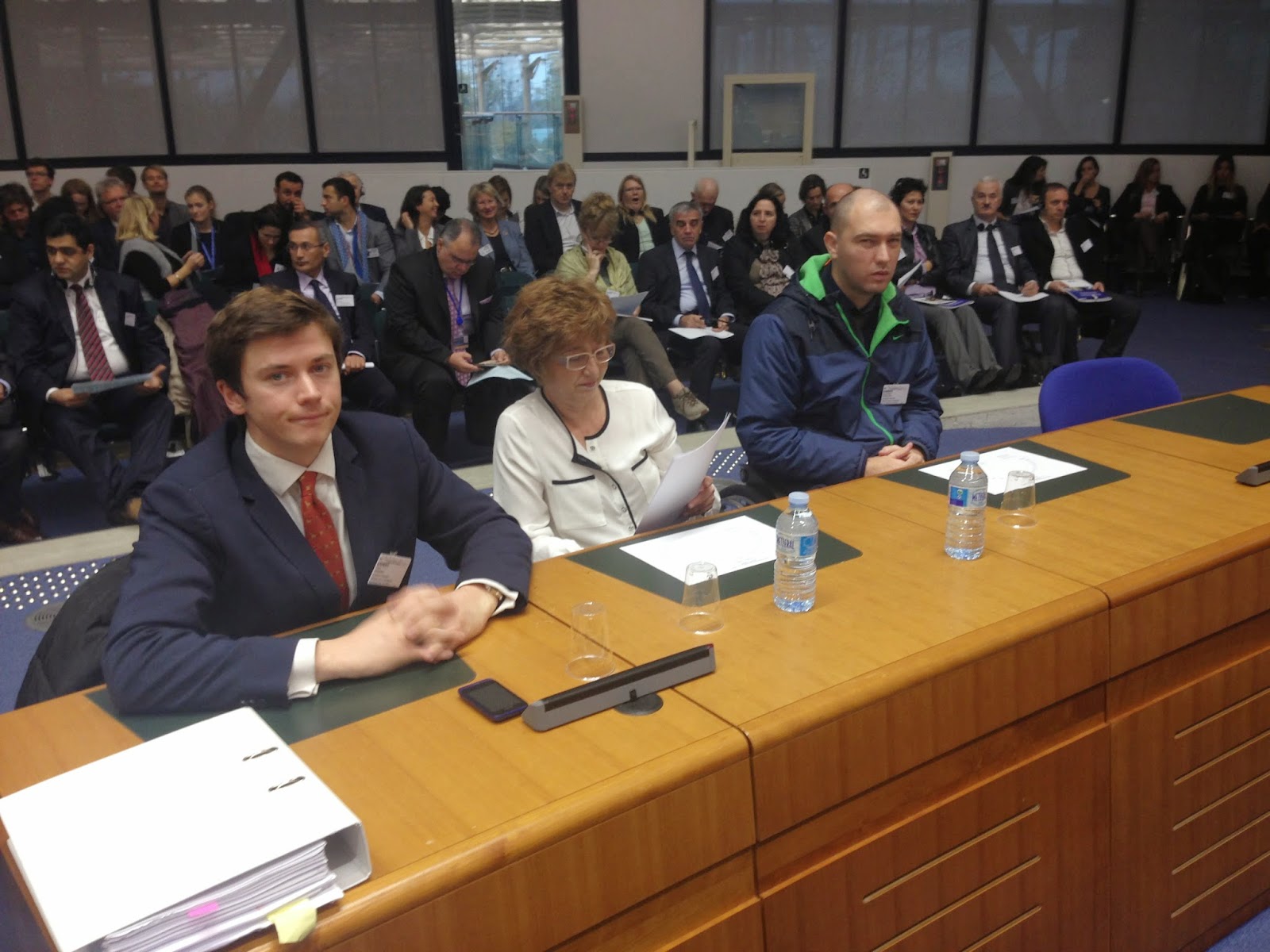
Tuesday, 6 January 2015
Hämäläinen v. Finland: A Story of Illusory Consensus and Lesser Families
This article is
an edited version of a presentation that I gave at the Rights on the Move:
Rainbow Families in Europe Conference that took place in Trento, Italy, on
16-17 October 2014.
This article offers a different perspective on the recent
European Court of Human Rights Hämäläinen
v. Finland judgment, primarily informed by my experience of acting as
the applicant’s representative. As this is not intended to be an exhaustive
analysis, I will try, as much as possible, not to reiterate criticism already formulated
by Judges Sajó, Keller and Lemmens in their brilliant dissenting opinion, as
well as by other commentators (see for example here
or here).
At the same time, mine is a view centered more on trans rights, as opposed to other
commentators, who usually examined the judgment against the context of the
Court’s jurisprudence on same-sex families more broadly. I advance two particular
suggestions. First, the fact that trans people frequently inhabit a space of
legal informality across Europe renders some of the Court’s methodological
tools inappropriate – and I refer here in particular to consensus. Second, this
judgment demonstrates that existing legal categories (such as sexual
orientation) do not provide a satisfactory basis for categorizing trans people’s
claims. This means that alternative arguments may have to be developed that more
accurately reflect the particular experience of trans people.

(caption from public hearing before the Grand Chamber on 16 October 2013)
Which consensus?
The facts of the case are quite straightforward – the
applicant celebrated a heterosexual marriage as a man, had a child together
with her wife, and after ten years of married life came out as a trans woman.
Under Finnish law, legal gender recognition of a married individual is
conditional on a relatively seamless conversion of marriage into registered
partnership, offering, for all effects and purposes, the same legal rights as
marriage. The applicant argued before the Court that this amounted to forced
divorce and complained about the breach of her rights under Articles 8 (right
to private and family life), 12 (right to marry) and 14 (prohibition of
discrimination) of the Convention. The
Court rejected the applicant’s claims twice – in Chamber
and Grand Chamber formations respectively. The Grand Chamber held that Member States
(MS) did not have an obligation to open marriage to same sex couples and that
in any event it was not disproportionate to ask the applicant to accept a
change in her civil status as a result of legal gender recognition, seeing that
registered partnership was more or less identical to marriage in its legal
effects.
The Hämäläinen Court’s
determination that there was no consensus among MS on the issues involved in
the case was critical to the eventual outcome. However, there are a number of general
and trans-specific objections in relation to the manner in which the Court
measured and then employed consensus. There are significant differences between
the Court’s own survey and information available from other sources. In Hämäläinen, the Court found that 24 MS
“have no clear legal framework for legal gender recognition or no legal
provisions which specifically deal with the status of married persons who have
undergone gender reassignment” (at §32). In the seminal trans rights case Christine
Goodwin v. United Kingdom decided twelve years earlier in 2002, the Court
relied on a finding that a vast majority of the MS surveyed (33 out of 37)
permitted legal gender recognition (at §§55, 84). The two data sets don’t
appear to square up, suggesting that there has been some backsliding since Goodwin, which surely cannot be accepted.
On the other hand, a
Europe-wide survey undertaken by ILGA Europe in 2012, which I referred to
in my submissions, suggested that a slim majority of 24 ½ out of 47 MS permitted
trans marriages to subsist post-legal gender recognition of one of the spouses.
The disparity
between these surveys may possibly be explained by a difference in
methodologies. Legal gender recognition is available in many countries based on
administrative or judicial practice, which may be
unreported, even in the absence of expressly stated legal rules. Even if
such practice may be inconsistent or unclear, trans people may in effect be
able to change their documents in many countries that the Court cited as
lacking explicit legislation in the area. Furthermore, the Court cannot draw
the conclusion that married people cannot transition legally simply from the absence
of specific regulations to that effect. Particularly in a civil law tradition,
courts will frequently require that any cause for the dissolution of marriage –
including in the context of legal gender recognition – be expressly provided for in
the law. For example, in 2006, the Austrian Constitutional Court ruled out forced
divorce in a transgender marriage as it lacked a clear basis in the law. To the
extent that consensus is based on a black or white reading of the law, it may
not therefore represent an accurate depiction of the situation of trans people
in many countries. Furthermore, the Court’s approach to consensus in Hämäläinen begs the broader question if
any progress on trans rights is even feasible in the short term, given the unavoidable
weight of a large number of countries with unclear procedures on legal gender
recognition.
This notwithstanding, there still
are some countries, such as Ireland, where legal gender recognition is simply
not available, in any circumstances. The situation in those countries is in
breach of existing jurisprudence to start with, as the Court had already
largely validated the standard promoted by the Committee of Ministers that
legal gender recognition procedures must be available, that should be “quick, transparent and
accessible”, in cases such as Christine
Goodwin v. United Kingdom or L. v.
Lithuania. The Court cannot legitimately rely on a states’ culpable
failure to comply with clear jurisprudence to build a consensus against trans
people seeking legal gender recognition, like Heli Hämäläinen.
Any inferences drawn from a flawed
survey must surely also be questionable. The Court had several alternatives to
the problematic approach of focusing on the large number of countries said to
lack clearly stated legislation on legal gender recognition, which it had
recourse to elsewhere in its jurisprudence. It could have discarded consensus as an adjudicatory tool in this case because it has not yielded useful results. It
could have relied on clearly identifiable trends across Europe towards the
simplification of legal gender recognition procedures, including by abandoning
forced divorce, as argued by the applicant and the third party interveners in
the case, and as per its celebrated approach in Christine Godwin. Finally, it could have taken
into account the sample of states that took an explicit stand on the issue of
transgender marriages, one way or the other, as it did in Vallianatos
v. Greece or in X and
others v Austria. Consensus
determined in this way would actually have favored the applicant - 13 out of 19
countries would not have interfered with her marriage.
It has been
pointed out elsewhere that at times the Court appears to manufacture a
consensus to suit a predetermined outcome. On the other hand, in Hämäläinen consensus appear to shift
even within the same judgment, leading to alarming conclusions. The Court stated initially that 24 out of 47 MS either lacked any
legal framework on gender recognition OR specifically banned married people
from changing their documents, warranting a wide margin of appreciation. However,
at §80 the Court noted that “contrary to the
majority of the Council of Europe member States, there exists a legal framework
in Finland designed to provide legal recognition for the change of gender.” It
appears that the Court all of a sudden made an assumption that all those 24 countries lacked any cognizable gender recognition
frameworks, omitting to take into account the unspecified number of countries where
legal gender recognition was possible, even if at the same time their position
on transgender marriages was not clearly stated. This may have been an error,
but it led to the questionable and unwarranted conclusion that the margin of
appreciation “must in principle extend both to the State’s decision whether or
not to enact legislation concerning legal recognition of the new gender of
post-operative transsexuals and, having intervened, to the rules it lays down
in order to achieve a balance between the competing public and private
interests” (at §75). Judge Ziemele, concurring, emphasized the same point,
stating that since “Finland already belongs to a minority group of States
which recognize the relevant legal consequences of a gender change…, [it] is
rather advanced in its internal processes as compared with the other societies
and probably does comply with positive obligations in so far as they can be
deduced to exist.” Since Finland already went beyond what was strictly required
under the Convention, Judge Ziemele’s reasoning went, the Court might as well
have stopped at this juncture without going into the proportionality analysis.
The manner in
which the Court manipulated consensus in Hämäläinen
has the potential to destabilize its jurisprudence on
trans rights, and weaken rights that we thought had already been won. Christine Goodwin is a celebrated
precedent precisely because it removed legal gender recognition from the margin
of appreciation, and recognized it as a right derived from Article 8,
corresponding to a positive obligation that states owed under the Convention. MS
do not have a choice in this respect, as the Court now suggests in Hämäläinen. Although alarming, this statement
may have been an oversight, as the Court actually reiterated approvingly the
holding in Goodwin and its progeny in
its recapitulation of the principles applicable to the case (at§68).
Nevertheless, the contradictory statements that the Court makes once against
demonstrate that the Goodwin
judgment has not been sufficiently internalized in Strasbourg, and may be
seized on by governments in future litigation to make life harder for trans
claimants.
The problems with utilizing sexual orientation as an exclusionary
criterion in the case of transgender marriages
From the beginning of my involvement after the
Chamber’s ruling, I tried very hard to distinguish the applicant’s situation
from that of a same-sex marriage seeking to get married (for more details about
my strategy see my previous articles here
and here). On the one hand, I was aware that the Court
was not willing to change tack so soon after its latest ruling on same-sex
marriage in Schalk
and Kopf v Austria. On the other hand, it seemed to me that there were
genuine and material distinctions between the two situations. Ultimately, the
Court concluded sternly that regardless of the fact that the applicant had not
advocated for same-sex marriage in general, the fact remained that her claim,
if accepted, would lead to the existence of a same-sex marriage (at §70). In
that respect, the findings from Schalk and
Kopf, to the effect that Article 8 cannot be interpreted to impose on
obligation on Contracting States to grant same sex couples access to marriage,
at least not until the prevailing consensus against same sex marriage changed,
also had to apply in Hämäläinen.
Judge Ziemele dissenting interpreted the majority’s rationale in the same key –
that “there has been no violation on account of the absence of a specific
positive obligation to introduce legislation on same-sex marriages.”
Leaving aside the distinction between the acquired
right to remain married and the presumptive right to get married, which goes to
the heart of the case, I find it almost offensive that the applicant’s
relationship should come to be defined exclusively on the basis of a criterion
which is more or less irrelevant in this particular context – their ascribed
sexual orientation. There has to be an element of private choice in sexual
orientation, it cannot be ascribed to an individual by courts or administrative
agencies. In other words, the price of escaping the box of gender, is to be
boxed in another legal category applied almost by default – that of same-sex
marriage. The dissenters in fact alluded to this aspect, when suggesting that the
applicant’s situation was different from that of homosexual couples, and that
therefore her relationship should have been treated differently:
In fact, the
national legal order treats their situation like that of homosexuals. However,
at least at the time of their entry into marriage, the applicant and her spouse
were not homosexual partners. Even after the applicant’s gender reassignment,
it is an oversimplification of the situation to treat her relationship as a
homosexual one. In our view, the crucial question regarding the discrimination issue
is whether the State has failed to differentiate between the applicant’s
situation and that of a homosexual couple by failing to
introduce appropriate exceptions to the rule debarring same-sex couples from
the institution of marriage.
Ultimately, this judgment is another confirmation of
the Court’s bias toward schematic and traditional family units, typically formed of
(different-sex) couples and their minor children (for criticism of a recent
judgment that also exemplifies this approach see HERE). The applicant’s relationship
should qualify for equal protection not by virtue of the actual or presumed
sexual orientation of the spouses assigned randomly by a court - whether
homosexual, or heterosexual, or other -, but because it is a long, stable, loving
relationship, not different in any relevant respects to that of any other
married couple.
One final point. Some people expressed regret that
Finland, of all countries where forced divorce is an issue, was the
jurisdiction producing the case that made it to the Grand Chamber. Other
countries, lacking the fall back option of registered partnership and the
streamlined procedures that are available in Finland, would have been better
candidates for a test case litigated at this level. Leaving aside the fact that
strategic litigation includes a fair amount of opportunism, and that we did not
really have a choice of countries to start with, I suggest somewhat
counter-intuitively, that Finland was exactly the country that we needed, as it
encapsulates neatly the essence of the demands made by trans people in the
applicant’s position. This category of claimants usually want nothing short
than preserving their marriage. To the extent that the case was brought against
say, Italy, we could expect at most a finding of a violation of Article 8 on
account of the absence of alternatives less restrictive than the dissolution of
marriage. Although this would be a
positive outcome in that it would benefit same-sex couples, it would arguably
still feel like a loss to partners in a transgender marriage, who would still
have to give up their marriage as a prerequisite to legal gender recognition.
In all likelihood, many couples would relinquish or postpone indefinitely
gender recognition and continue their existence as de facto same-sex married
couples. They would thus be pushed to inhabit a grey area of legality,
appearing as married same-sex couples in countries prohibiting same sex
marriages, whereas the trans spouse would identify publicly in their self
identified gender, even if it would still not be recognised under the law.
Conclusion
Ultimately, the experience of trans rights litigation
in the past may suggest that we should better look at Hämäläinen as a necessary step in a broader process of change, just
as Christine Goodwin came after a
series of disappointing trans rights judgments against the United Kingdom. The
particular set-up in the United Kingdom came to define the Court’s
jurisprudence on trans issues. As I argued elsewhere, this is
now an inadequate framework, for at least two reasons – because of the
different realities in countries other than the United Kingdom, particularly
from Eastern Europe, and because of developments at the international level,
emphasizing the autonomy of the individual to self-identify their gender, free
from other requirements such as sterilization or forced divorce. As much as the
Hämäläinen majority muddled the
waters, the dissenters trailblazed an alternative path to a distinctive
treatment of transgender claims in the future, and this may be the best outcome
we could have hoped for at this particular moment.
Friday, 31 October 2014
Monica Macovei si persoanele cu dizabilitati
As dori sa comentez pe scurt pozitia
Dnei Macovei strict cu privire la persoanele cu dizabilitati, din perspectiva
drepturilor omului. Nu imi propun sa analizez contextul mai larg al politicilor
sociale sau optiunilor dumneaei ideologice, au facut-o altii. Nu am gasit nimic
relevant in programul Dlui Johannis. Ceilalti nu ma intereseaza, pentru ca
oricum nu i-as vota din alte motive, desi presupun ca nici ei nu au nimic de
spus. Am ales totusi
sa ma concentrez pe Dna Macovei pentru ca dumneaei a ales sa abordeze acest
subiect, pentru ca se revendica, prin experienta sa profesionala, de la
ideologia drepturilor omului, si avand in vedere deschiderea ei europeana.
In programul dumneaei, Dna Macovei
mentioneaza persoanele cu dizabilitati, declarand ca “Trebuie eliminate și
sistemele de mită socială cu scop electoral, pentru că bătrânii, copiii,
bolnavii și persoanele cu handicap sunt singurele categorii pe care statul
trebuie să le protejeze.” Ieri (30 octombrie), Dna Macovei a afisat o
declaratie filmata pe contul dumneaei de Facebook cu urmatorul mesaj: “Eu
cred în solidaritate, dar nu cred în falsa asistență. Ce se întâmplă cu
persoanele cu dizabilități ne privește pe toți. Unii s-au născut așa, alții,
nu. Ceva în viața lor i-a adus aici: un accident, o boală. Pe toți ne privește
ceea ce se întâmplă cu ei. Persoanele cu dizabilități nu sunt o povară pentru
societate. Ei sunt egalii noștri, ei sunt frații noștri. Acești oameni trebuie
să fie primii care să contribuie la redactarea și aplicarea legilor care îi
privesc pe ei. Numai cine a trecut prin asta ne poate învăța cum să fim o
societate mai bună și oameni mai buni.”
Persoanele cu dizabiliati din Romania se
confrunta cu mai multe probleme grave. Multi sunt internati pe lunga durata in
institutii sociale si spitale psihiatrice, unde traiesc o viata izolata si
lipsita de speranta, in conditii mizere, fiind supusi deseori unor tratamente
inumane si degradante. Este notoriu cazul Spitalului Poiana Mare unde acum zece
ani au murit sute de pacienti din cauza conditiilor de viata precare si lipsei
ingrijirilor medicale de baza. Acest scandal a rezultat intr-o condamnare de
rasunet a Romaniei la CEDO intr-un caz in care l-am reprezentat pe reclamant Campeanu
v Romania, si de care Dna Macovei stie cu siguranta. Dezvaluiri similare cu
privire la abuzuri grave sunt la ordinea zilei. Cu toate acestea, Romania nu
numai ca tolereaza abuzurile, dar refuza sa se angajeze in reforma sistemului
prin dezinstitutionalizare. Acest proces presupune inchiderea institutiilor si
mutarea persoanelor cu dizabilitati in comunitate. Conform studiilor
stiintifice si experientei altor tari, dezinstitutionalizarea profita atat
persoanelor cu dizabilitati cat si societatii in intregul ei.
Sistemul actual de beneficii sociale
este invechit si mentine persoanele cu dizabilitati care traiesc in comunitate
si familiile lor la limita saraciei, inchizandu-le intr-o relatie de dependenta
fata de stat si condamnandu-le la inactivitate si izolare. Infrastructura si
serviciile oferite publicului sunt inaccesibile. In cazul fericit in care
persoanele cu dizabilitati ajung sa invete, o fac in scoli speciale unde
standardele sunt catastrofale si abuzurile frecvente. Lipsa educatiei duce
implicit la lipsa oportunitatilor in viata, la excluziune, marginalizare si
singuratate. Atunci cand retelele de suport din comunitate se destrama
(parintii mor, prietenii sunt epuizati), persoanele cu dizabilitati ajung
inevitabil in institutii. Daca institutiile statului sunt ineficiente si
retrograde, prejudecatile larg impartasite la nivelul populatiei si nepasarea
pecetluiesc soarta acestor persoane.
In concluzie, avem cateva cuvinte cheie:
dezinstitutionalizare, incluziune sociala, protectie eficienta impotriva
abuzurilor, egalitate, demnitate. Acestea corespund in mare principiilor
directoare ale Conventiei Natiunilor Unite a Drepturilor Persoanelor cu
Dizabilitati, ratificata de Romania si de marea majoritatate a statelor membre
a Uniunii Europene, cat si separat de Uniunea Europeana. Nu am auzit niciunul
din aceste principii cheie in discursul Doamnei Macovei. Asta in ciuda faptului
ca Dna Macovei se revendica de la ideologia drepturilor omului si a fost cu
siguranta expusa, cel putin la Parlamentul European, acestui discurs. Tin sa
precizez in acest sens ca doleantele persoanelor cu dizabilitati nu sunt un
subiect de nisa – din punct de vedere numeric, persoanele cu dizabilitati si
familiile lor sunt o minoritate semnificativa, de ordinul sutelor de mii; din
punct de vedere moral si legal, un stat de drept este incompatibil cu
impunitatea pentru tortura si rele tratamente practicate pe scara larga.
Situandu-le intre copii si batrani, Dna
Macovei infantilizeaza persoanele cu dizabilitati pe care le priveste ca
recipienti pasivi de beneficii sociale. Paradoxal, in cazul persoanelor cu
dizabilitati Dna Macovei sustine implicit "falsa asistenta" pe care
altfel o respinge ritos. Enuntul programatic mentionat mai sus este practic identic
cu prevederea constitutionala conform careia “persoanele cu handicap se bucura
de protectie speciala”, demonstrand in mod clar o logica asistentiala. Am scris
mai demult despre dublul sens
al terminologiei folosite la adresa persoanelor cu dizabilitati: in logica
actuala “protectie speciala” inseamna in fapt segregare, marginalizare,
discriminare, abuz. De fapt, persoanele cu dizabilitati nu au nevoie de
“protectie” ci de “suport” pentru a-si implini potentialul si a deveni membri
cu drepturi depline ai societatii. In aceeasi nota, Dna Macovei foloseste
terminologia discreditata si stigmatizanta de "handicap”, eroare
rectificata in mesajul video.
Cat despre mesajul video el se inspira
in mod clar din modelul medical al dizabilitatii, care identifica
“handicapul” (deci persoana) drept cauza a problemelor intampinate de
persoanelor cu dizabilitati. Acestui model Conventia ONU mai sus amintita ii opune
modelul social, care identifica problema in barierele ridicate de societate si
care impiedica participarea persoanelor cu dizabilitati, exemplul cel mai clar
fiind lipsa accesibilitatii. Monica Macovei insista pe blestemul existential al
handicapului, intr-un discurs lacrimogen si paternalist menit sa starneasca
compasiunea. Ori persoanele cu dizabilitati nu au nevoie de compasiune, ci de
respect si drepturi egale.
Singura parte aparent pozitiva este
apelul Doamnei Macovei la implicarea persoanelor cu dizabilitati in elaborarea
politicilor care le priveste. Dar, stati putin – in timp ce face asta, cui se
adreseaza Dna Macovei? Se adreseaza cumva persoanelor cu dizabilitati,
semnaland dorinta ei de a le include ca partener egal in discutie? Nu! Ni se adreseaza
noua, voua, oamenilor “normali si maturi”, vorbind despre persoanele cu
dizabilitati la persoana treia, cumva prezente in camera, dar invizibile.
Asadar, pe langa faptul ca e, in cel mai bun caz, neinformata, Dna Macovei
insulta persoanele cu dizabilitati. In acest sens, si avand in vedere cheia
discursului prezentat mai sus, permiteti-mi sa ma indoiesc de sinceritatea Dnei
Macovei.
Inca ceva despre ideea primita de-a gata
si regurgitata de fanii Dnei Macovei fara nici un pic de reflectie, conform
careia marsul anti-coruptie al candidatei lor preferate va profita implicit si
automat si minoritatilor. Am precizat mai sus ca in ultimii 10-15 ani, sute,
mii de oameni au murit in conditii suspecte sau au fost brutalizati in
institutii. Cu ocazia sedintei publice in dosarul Campeanu anul trecut, CEDO a
solicitat exemple de condamnari ale celor vinovati. In timp ce Guvernul nu a
fost in masura sa prezente nici macar un singur exemplu, noi am fost in masura
sa aducem numaroase exemple de NUP-uri, demonstrand practic ca personalul din
spitale se bucura in mod oficial de impunitate. Cine este vinovat de aceasta
stare de fapt? BINGO! Procurorii Dnei Macovei, idolizati si glorificati ca
luptatori neinfricati impotriva coruptiei, "panaceu universal" etc
etc. Dna Codruta Kovesi insasi, pupila Dnei Macovei, a confirmat un NUP in
dosarul Poiana Mare care a scandalizat pe multi in Europa. Dna Macovei insasi
cat a fost la Ministerul Justitiei, nu a facut nimic pentru a schimba ceva in
bine. Acesta este doar un exemplu care ilustreaza de ce drive-ul anticoruptie
in sine nu vindeca de prejudecati si nu poate fi (in toate cazurile) o solutie
pentru problemele sociale cum sugereaza Dna Macovei
Unii fani Macovei sugereaza cu
obtuzitate ca abuzul si tortura nu sunt chestiuni urgente, si ca intai trebuie
sa rezolvam cu coruptii. Permiteti-mi sa nu fiu de acord si sa nu mai am
rabdare. Pentru mine cauza persoanelor cu dizabilitati este urgenta si
fundamentala. Eu NU votez cu Dna Macovei pentru ca politicile ei in domeniul
dizabilitatii ar perpetua dezastrul actual, dupa cum am aratat.
Subscribe to:
Posts (Atom)